

31 January Tax Bill Calculator
What you pay HMRC on 31 January 2027 for your 2025/26 locum work: the year’s bill, the payment on account that comes on top of it, and what follows in July.
Arithmetic only, not tax or financial advice. Your HMRC calculation is the figure to pay.
 Free to start · on iPhone, Android and the web
Put next January's tax aside as you go
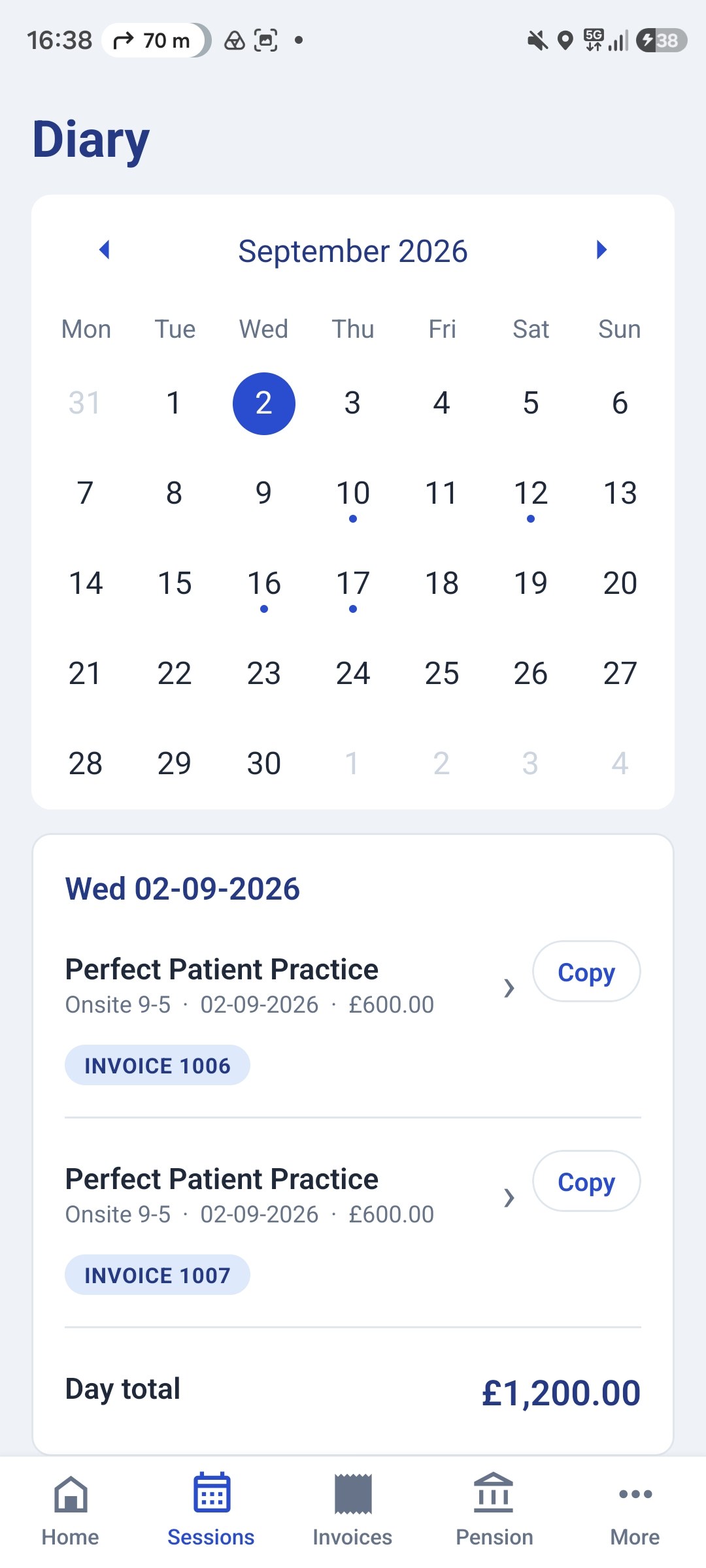
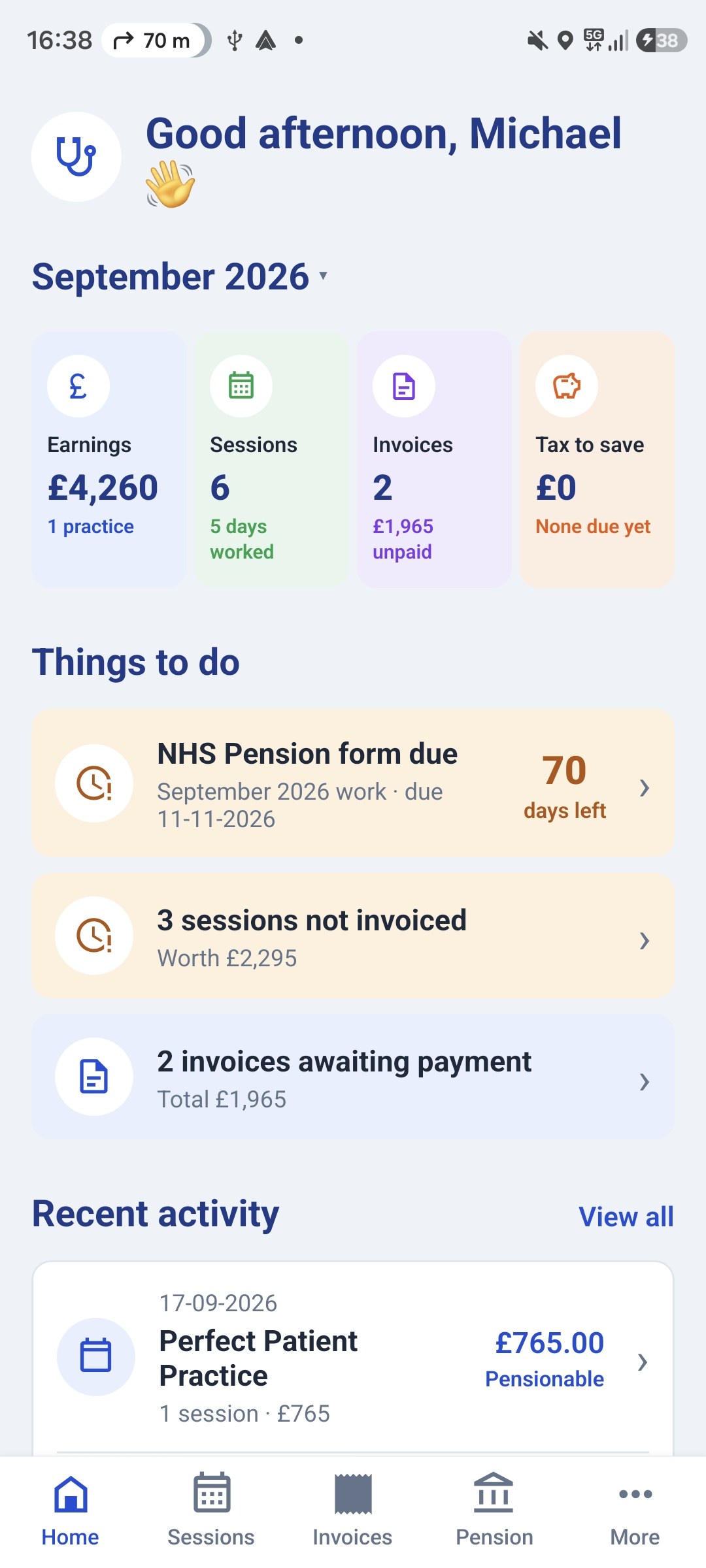
GP Locum logs your sessions, mileage and expenses as you go, and GP Locum Pro keeps a running figure for what to set aside. The diary and invoices are free. On your phone and on the website.


Or use it on the website, free →
Also on your phone: App Store for iPhone and Google Play for Android.
What you pay on 31 January 2027
Two things fall due that day. The first is the rest of your 2025/26 bill: income tax and Class 4 National Insurance on your profit, plus any student loan, less anything you already paid on account towards it. HMRC calls this the balancing payment.
The second is the first payment on account for 2026/27, which is half of your 2025/26 income tax and Class 4. HMRC assumes next year will look like this one and takes it in advance, with the other half due on 31 July 2027. The student loan is never paid on account.
Your return for 2025/26 has to be filed online by 31 January 2027 as well. The calculation HMRC shows when you file it is the figure to pay.
Why the first one is so big
In your first year of locum work nothing has been paid on account, so the first January takes the whole year’s bill and half as much again.
A locum who invoiced £60,000 in 2025/26, claimed £4,000 of expenses and paid £5,000 into the NHS pension has a bill of £10,209. On 31 January 2027 they pay all of it plus a payment on account of £5,104: £15,313 in one go, then £5,104 more on 31 July 2027.
It only happens once. From the second year, each January and July payment is about half a year’s bill, and January also settles the difference. To be ready for the first one, set money aside from every fee from the start: the New Locum Starter Plan works out how much, and the locum tax guide explains each part of the bill.
If you have a salary as well
Most of a salaried GP’s tax comes off through PAYE. When more than 80% of the year’s tax was taken that way, HMRC asks for no payments on account at all, and you pay only the bill.
A GP on a £70,000 salary who also did £7,500 of locum sessions owes £3,000 on 31 January 2027, and nothing in July. If what you owe is under £3,000 and you file online by 30 December 2026, HMRC can collect it through your tax code over the following year instead.
What the calculator leaves out
It works on fees, expenses, your own pension contributions and a salary. It doesn’t include savings interest, dividends or rent, the High Income Child Benefit Charge, voluntary Class 2 National Insurance, or a reduction you have already agreed with HMRC. Any of those changes the bill.
Fees here means what you invoiced for your work. The 14.38% employer pension contribution you collect and pass on to NHS Pensions belongs to the practice, so it isn’t in your fees and isn’t an expense either.
Frequently asked questions
- Why is my first 31 January tax bill so big?
- Because it holds two years at once: the whole of your first year's bill, and the first payment on account towards the next year, which is half as much again. A locum with a £10,209 bill for 2025/26 pays £15,313 on 31 January 2027 and £5,104 on 31 July 2027. It only happens in the first year.
- What is a payment on account?
- An advance on next year's tax bill. HMRC takes half of this year's income tax and Class 4 National Insurance on 31 January and the other half on 31 July, then settles the difference the January after. No payments on account are due if the bill is £1,000 or less, or if more than 80% of your tax was taken through PAYE.
- Do salaried GPs who do some locum work make payments on account?
- Often not. If more than 80% of the year's tax came off through your salary, HMRC asks for none, and you pay the locum tax as a single bill on 31 January 2027. A GP on £70,000 with £7,500 of locum sessions owes £3,000 and nothing on account.
- Does my NHS pension contribution reduce my tax bill?
- Your own contributions on locum work come off your income before income tax is worked out, so they cut your income tax at your top rate. They don't reduce Class 4 National Insurance. The employer's 14.38% isn't yours, so it doesn't come into it.
- Can I reduce my payments on account?
- Yes, if you expect next year's bill to be lower, for example fewer sessions or parental leave. You claim it in your HMRC online account or on form SA303. If you reduce them too far, HMRC charges interest on the shortfall.
- What if I can't pay it all on 31 January?
- HMRC charges interest on anything unpaid from 1 February, and a 5% penalty if it is still unpaid 30 days later. If you can't pay in full, HMRC can agree a payment plan to spread it, and it is better to ask before the deadline than after.
Sources
Checked 9 November 2026. Rates and factors change. The primary source wins if it disagrees with anything here.
- Understand your Self Assessment tax bill: payments on account, GOV.UK: the two dates, the £1,000 and 80% rules
- Income Tax rates and allowances for current and previous tax years, GOV.UK: the 2025/26 personal allowance and bands
- Income Tax in Scotland: 2025 to 2026 tax year, GOV.UK: the Scottish bands for the year
- Self-employed National Insurance rates, GOV.UK: Class 4 at 6% and 2%
- Rates and thresholds for employers 2025 to 2026, GOV.UK: the student loan thresholds for the year
- Pay your Self Assessment tax bill through your tax code, GOV.UK: under £3,000, filed online by 30 December
- Claim to reduce payments on account, GOV.UK: form SA303
- If you cannot pay your tax bill on time, GOV.UK: interest, penalties and payment plans
Read the guide
GP Locum Tax Guide
Every deduction that comes out of a newly qualified locum's fees: tax, Class 4 NI, student loan, pension, expenses and the first 31 January.
Read guide →New Locum Starter Plan
Starting as a locum GP? What to set aside from every fee, and every tax date and amount to your second 31 January, the first January's double hit included.
Open tool →Locum Tax Calculator
Work out what to set aside from your locum fees for tax and National Insurance.
Open tool →Making Tax Digital Checker for GPs
When Making Tax Digital starts for you, from your fees and any rent. Your salary and a partner's profit share don't count.
Open tool →Making Tax Digital for Locum GPs
Who is in scope, the quarterly deadlines, why the employer pension contribution stays out of turnover, and the filing routes.
Read guide →