

Salaried GP Sessional Rate Calculator
A salaried GP rate of “£12,000 a session” is a yearly figure for one weekly session. Turn it into a salary, pay per session and per hour actually worked, and what the post costs a practice.
Illustrative arithmetic only, not tax, pension, employment or financial advice.
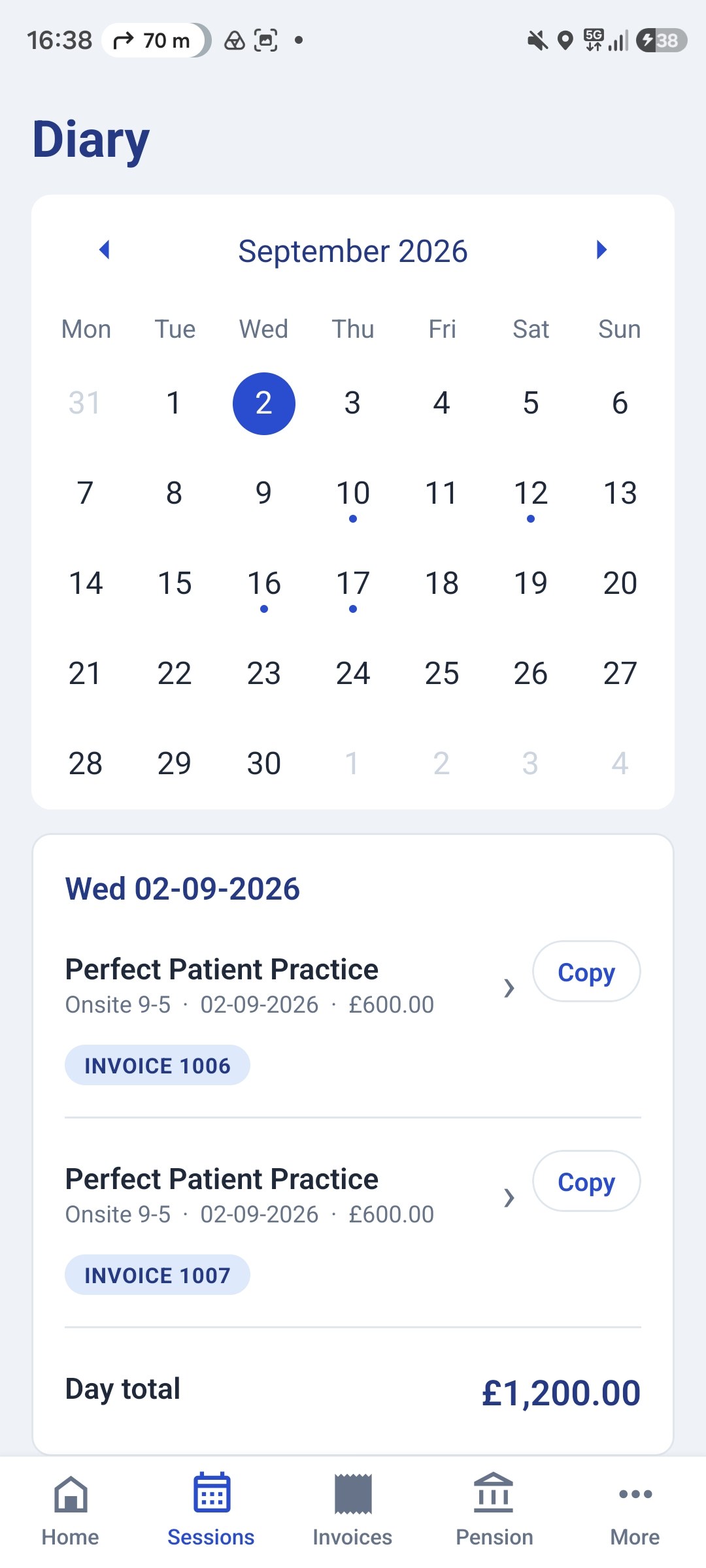
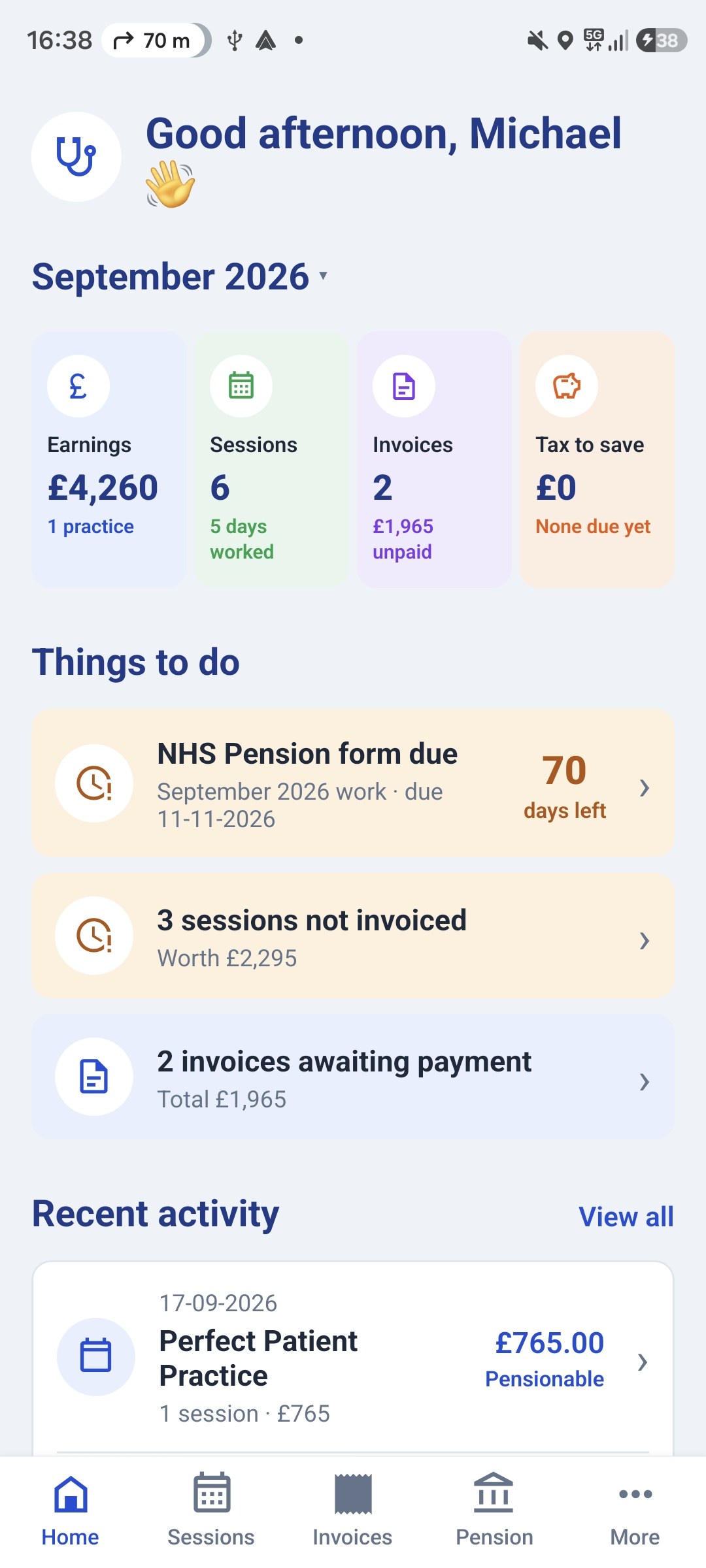
 Free to start · on iPhone, Android and the web
Weighing salaried against locum work?
If you go locum, GP Locum logs your sessions, raises the invoices, fills your Form A and Form B and tells you what to set aside for tax. On your phone and on the website.


Or use it on the website, free →
Also on your phone: App Store for iPhone and Google Play for Android.
What “£ per session” means for a salaried GP
Salaried GP posts are advertised at a rate “per session”, and that rate is a year’s pay for one weekly session, not a payment for each session you work. Multiply it by the number of sessions a week and you have the annual salary. A post at £12,000 a session on 4 sessions a week pays £48,000 a year.
The convention comes from the BMA model salaried GP contract, which defines full time as 37.5 hours a week made up of 9 nominal sessions of 4 hours 10 minutes. The full-time salary divided by 9 is the rate per session, and part-time posts are a number of those sessions.
A locum rate is the opposite: what you are paid for turning up once. That is why the two can’t be compared directly. To compare a salaried offer with locum work, use the salaried vs locum calculator.
The 2026/27 salaried GP pay range, per session
Each year the DDRB recommends a pay range for salaried GPs, and the BMA publishes it. For 2026/27, as a full-time salary and as a rate per session:
| Nation | Full time | Per session |
|---|---|---|
| England | £78,699 to £118,759 | £8,744 to £13,195 |
| Wales | £81,893 to £123,573 | £9,099 to £13,730 |
It is a recommended range, not a legal minimum. Your own contract sets your pay, and the model contract entitles salaried GPs to the yearly uplift that follows the DDRB, so check yours for the uplift clause. Scotland and Northern Ireland are not covered here.
A worked example
£12,000 a session, 4 sessions a week, on the model contract’s leave:
- Salary: £12,000 × 4 = £48,000 a year, £4,000.00 a month.
- Full-time equivalent: the same rate at 9 sessions is £108,000.
- Per session actually worked: the salary is paid every week, but 8 of the 52 weeks are paid leave. 4 sessions × 44 weeks is 176 sessions, so each one worked earns £272.73, or £65.45 an hour.
- Cost to the practice: £6,902 employer pension at 14.38% and £6,450 employer National Insurance makes £61,352 a year, £5,113 a month, or £348.59 for each session worked.
Why pay per session worked is higher than the rate suggests
The BMA model contract gives a full-time salaried GP 30 working days’ annual leave, the public and bank holidays, and two “NHS days”, all pro rata for part-time. With the eight bank holidays in England and Wales that is 40 working days, or 8 weeks a year, paid but not worked. Dividing the salary by the sessions actually worked, rather than by 52 weeks, is what makes a salaried rate comparable with a day rate or a locum session.
Study leave, sick pay and parental pay add further value that is not in these figures. If your contract gives different leave, change the leave weeks in the calculator.
For practices: the cost of a post
On top of the salary a practice pays the NHS Pension Scheme employer contribution of 14.38% (the headline rate is 23.7%, and the rest is funded centrally) and employer National Insurance of 15% on pay above £5,000 a year in 2026/27. The calculator shows the total a year, a month and per session worked, and how many months of the post a budget pays for.
It does not deduct Employment Allowance, which many practices can set against their whole employer National Insurance bill rather than against one post. Covering a GP’s absence has its own rules: see locum cover insurance and the SFE reimbursements.
Frequently asked questions
- What does £12,000 per session mean for a salaried GP?
- It means £12,000 a year for each weekly session. On 4 sessions a week that is a salary of £48,000 a year, and the full-time equivalent at 9 sessions is £108,000. It is not £12,000 for each session worked.
- How many hours is a salaried GP session?
- The BMA model contract counts a session as 4 hours 10 minutes, and full time as 9 sessions, which is 37.5 hours a week. Many GPs and practices agree actual hours instead of nominal sessions, so check the job plan.
- How do I work out a salaried GP's pay per session worked?
- Divide the annual salary by the sessions actually worked in a year: sessions a week times the weeks left after paid leave. On the model contract's 8 weeks of leave, £12,000 a session works out at £272.73 for each session worked.
- What is the salaried GP pay range for 2026/27?
- The DDRB recommended range for 2026/27 is £78,699 to £118,759 full time in England, which is £8,744 to £13,195 per weekly session, and £81,893 to £123,573 in Wales. It is a recommendation published by the BMA, not a legal minimum.
- How much does a salaried GP session cost a practice?
- The salary plus 14.38% employer pension and employer National Insurance at 15% above £5,000 a year. For a post at £12,000 a session on 4 sessions that is £61,352 a year, or £348.59 per session worked, before any Employment Allowance.
Sources
Checked 6 November 2026. Rates and factors change. The primary source wins if it disagrees with anything here.
- Salaried GP pay ranges, BMA, updated 14 August 2026: the DDRB recommended ranges for 2026/27
- Salaried GP handbook, BMA, 2025 update: the model contract's 37.5 hours as nine sessions of 4 hours 10 minutes, and its annual leave, bank holidays and NHS days
- Rates and thresholds for employers 2026 to 2027, GOV.UK: employer National Insurance at 15% above the £5,000 secondary threshold
- NHS Pension Scheme employer contributions, NHS Employers: the 23.7% employer rate, of which employers pay 14.38% including the levy
Read the guide
Salaried vs Locum Calculator
Compare a salaried session rate against a locum rate like-for-like, total package with paid leave, pension and benefits, plus the break-even locum rate.
Open tool →GP Locum Rates
Why there is no official rate, what competition law lets you share, and the salaried pay range as a yardstick.
Read guide →Type 2 Forms Explained
The self-assessment form for salaried and sessional GPs: who files, annualisation, and the deadlines.
Read guide →NHS Pension Contribution Rates for GPs
The 2026/27 and 2025/26 tiers, how the tier is set for partners, salaried GPs and locums, the cliff edges, and the employer's 14.38%.
Read guide →Locum Cover Insurance for GP Partners
What NHS England pays towards a locum for sick or parental leave in 2026/27, how to claim it, the gap it leaves, and the tax on cover.
Read guide →